BOSQUE DEL APACHE, NM–NOV 29-DEC 3, 2008


I accompanied friends Skip Stubbs and Phil Colla to the Bosque del Apache National Wildlife Refuge for a few days starting in late November. Bosque del Apache means "woods of the Apache" and was named by the Spanish who observed Apaches routinely camped in the riverside forest there. Bosque is slightly more than an hour by car south of Albuquerque, along the Rio Grande Valley in Socorro County, NM. It is located on the northern edge of the Chihuahuan Desert, with an elevation that ranges from 4500 to over 6200 feet above sea level.

Why would a photographer of "marine-related" subjects go to the desert?
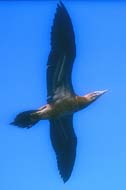
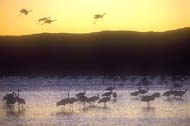
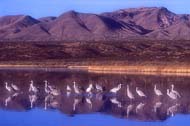
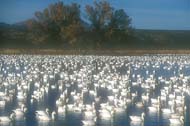
While over 300 species of birds and many other animals can be photographed there, I was concentrating on two species of large marine birds that migrate from the north to Bosque in the autumn and winter months–sandhill cranes (Grus canadensis) and snow geese (Chen caerulescens). A count taken the day before we arrived indicated about 5,000 sandhill cranes and almost 33,000 snow geese were there–as well as over 26,000 ducks.

I'm not a "bird photographer" and lack the typical birder's lens–a 600mm f4, with a 1.4 or 2X teleconverter. At peak times (sunrise & sunset) there might be 40-50 photographers around, most with a camera setup like that or something similar. I was using a 300mm f2.8 and an 80-400mm zoom. So most of my shots were of the "scenic" variety, rather than tight shots of individual birds. Fortunately we had great weather (cold–one dawn was 26 degrees–but very clear) and loads of scenic photo opportunities, so I managed to contain my lens envy. Logistics were also easy. Bosque was only a few miles from our hotel in the town of Socorro, and each photo site had parking and adequate space for setting up tripods and cameras.

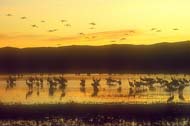
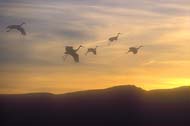
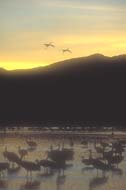
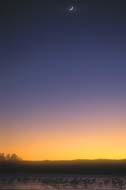
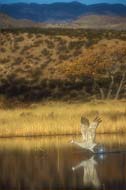
Sandhill cranes can reach a height of four feet, with a wingspan approaching seven feet. My favorite shots were of cranes flying back for a landing in the ponds, with the golden light of sunset.

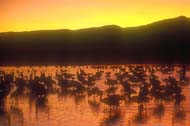
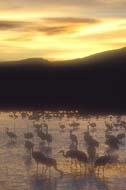
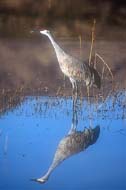
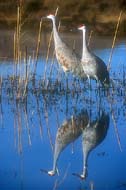
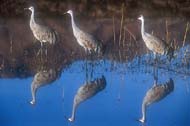
With that sunset light in the background, stationary shots of the cranes were also worth taking.

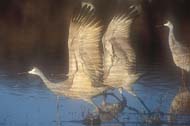
We'd get to Bosque before dawn for the sunrise, rest at mid-day, then go back in the afternoon for the sunset. When the sun was well up in the sky, there were opportunities for sandhill crane reflections and "takeoff" shots.

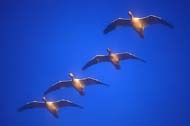
Snow geese approaching as the light turns golden at sunset.

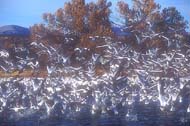
The snow geese would look very tranquil, such as the scene above left, then something would set them off…

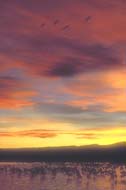
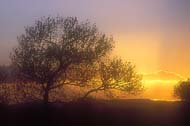
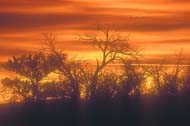
Sunrise, at least for me, was not as productive as sunset–the birds had a tendency to fly away from, rather than towards us. Still, it was worth watching.

A fun trip, and relatively easy to do compared to a lot of my other journeys!

Best to all,

Ken
http://www.seaimages.org

Kona Cost — September 13-20, 2008


Back in August, I realized I hadn’t done a dive trip this year (snorkeled with sailfish & whale sharks in Mexico and took surface shots of humpbacks in Alaska, but only one tank dive all year). So I booked a week on the Kona Aggressor–a liveaboard dive boat which operates off the Kona Coast (west side of Hawaii–the Big Island). When I told this to one of my experienced diver friends, she asked one question: "Why?" It’s not an unreasonable question from divers who travel quite a bit, as fun as a week diving in Hawaii might sound.


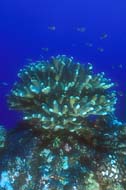
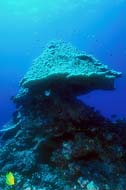
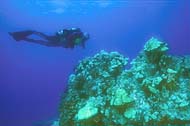
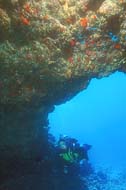
The reefs in Hawaii (above) are far less colorful then other locations further west. Fish, especially large schools, are not plentiful.


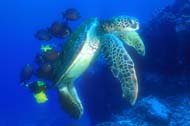
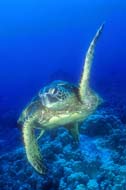
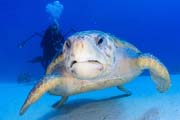
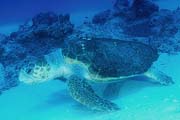
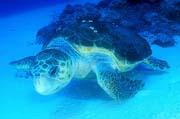
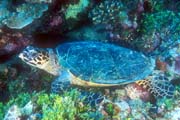
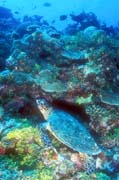
I had two main reasons for deciding to go there. First, I hoped for more photo opportunities with green sea turtles (Chelonia mydas) at a site called Turtle Pinnacle, which is a cleaning station where the turtles allow the reef fish to remove algae and parasites from their shells. Unfortunately, the turtles didn’t show up at this site during our dive there–the two shots above were taken my on last visit to the Big Island in 2003. The second reason was that a trip to Kona from my home near San Francisco represents one plane flight each way for me. This might sound like a trivial reason, but on each of my last three trips by air (coming back from Mexico and both going and coming from Juneau) my first flight was delayed and I missed my connecting flights. We all know air travel is much more of a hassle now, and minimizing Things That Could Go Wrong was a factor in my decision.


The photos above are of Holly Ong–my dive buddy for the week. Holly lives just south of San Francisco, and we are both members of the No. CA Underwater Photographic Society–but we didn’t know each other prior to meeting on this trip! We both have SCUBA certification cards so old (early 70’s) they don’t have individual numbers on them. She is one of those "been there, done that" divers, and an excellent buddy–always aware of where I was (versus my tendency to wander away with my face stuck in the viewfinder), and we have similar rates of air consumption. She is also very cheerful and upbeat–always an asset in the close confines of a liveaboard dive boat.


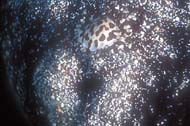
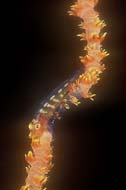
The photos above are two of the tiny critters we saw. The shot on the left is a Black White Spotted Crab (Lissocarcinus orbicularis) which is about the size of a dime. It lives on the Black Sea Cucumber (Holothuria atra) and does no harm to its host. The photo at right is of a Wire Coral Goby (Brianinops amplus) which is less than an inch in length. The goby tends to hide on whatever side of the wire coral you are not on, and with the coral itself moving back and forth, this is not an easy subject to photograph!


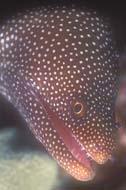
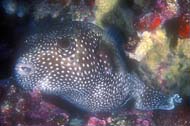
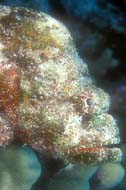
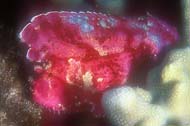
Here are a few of the reef denizens we saw. The photo at top left is of a Whitemouth Moray Eel (Gymnothorax meleagris), which is one of the most common eel species (and there are many!) in Hawaii. Top right is a Guineafowl Puffer (Arothron meleagris) which occasionally hovers in place on the reef so you can grab a photo. Various members of the Scorpaenidae family can be hard to distinguish, but (I think) the photo at bottom left is of a Titan Scorpionfish (Scorpaenopsis diabolus), which is endemic to Hawaii. At bottom right is a Leaf Scorpionfish (Taenianotus tricanthus). They come in a variety of colors, are small and hard to find. I actually found this one myself–VERY unusual, as I’m one of the worst critter spotters. Most of the smaller subjects in my photos were pointed out to me by someone else.


A dive photo trip to Hawaii wouldn’t be complete without frogfish (Antennariidae sp.) photos. These four photos are of two frogfish that were right next to each other. I think you can probably make out the frogfish in the two photos on the bottom above, but good luck with the two photos on the top if you don’t have experience seeing these guys! Well, here’s a hint–click on the photo at top left to enlarge, and find the mouth of the fish on the top right side of the photo. From about the middle of the mouth, proceed back to the left, about a third of the way and hopefully you can make out the eye. You can probably see the mouth of the fish in the photo top right (near bottom of the photo), but the angle makes finding an eye more work than its worth.


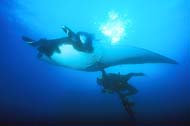
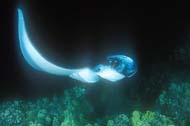
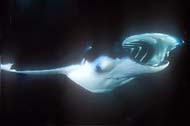
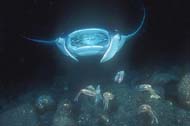
The Kona night dives with manta rays (Manta sp.) were an unexpected highlight. The mantas feed on the plankton attracted by lights provided by divers and the nearby airport. These dives are world-famous in the diving community and immensely popular. There were 10-12 boats and 40-50 divers present for each of the two night dives we did here. I’d declined doing them during my last trip, because I feared all the divers would be mucking up the visibility and getting between my camera and the mantas. The mantas, in feeding mode with their mouths open, come so CLOSE that it’s still possible to get good photos.


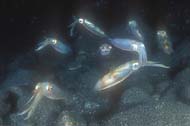
Another interesting aspect of this night dive was the appearance of these eight Oval Squid (Sepioteuthis lessoniana). Naturally this attracted a lot of attention, but I just waited until late in the dive when most of the other divers had gone back to their boats.


I then tried for some shots with both the squid and a feeding manta, but I didn’t follow the "get close" part of the photo mantra ("get low, get close, shoot up") to get a good enough angle for a decent shot. Too bad–the photo opportunity was certainly there.


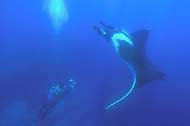
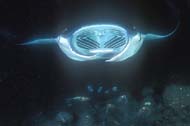
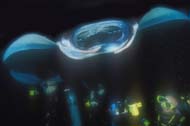
Despite my apprehension about doing the manta night dive because of all the people, this shot above with the divers and manta turned out to be my favorite of the trip. You might notice none of the divers are wearing snorkels. We were prohibited from doing so, because the mantas swoop down so close a snorkel could scrape and harm them. So I learned my lesson, and pass it on to you–if you’re ever diving in Kona, DON’T neglect to do the manta night dive!


Best to all,

Ken

http://www.seaimages.org

One Day On The Water In SE Alaska

Technically, we were on the water for three days, but all the images you see in this blog post were taken on Sunday, August 10th. I was privileged to be invited to spend a week with pro photographers Jon Cornforth (www.cornforthimages.com)
and Stuart Westmorland (www.stuartwestmorland.com) on Jon’s boat, cruising the waters of Alaska’s inside passage. We flew up to Juneau on Friday evening, provisioned and gassed the boat Sat am, and motored 40-50 miles that afternoon. We photographed on Sunday, but late in the day Jon learned that while his wife and daughters were running errands, their house in Seattle had been severely damaged by fire! So we came back to Juneau on Monday and flew home Tuesday morning.


1

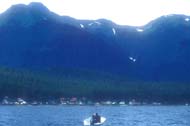
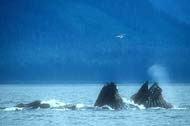
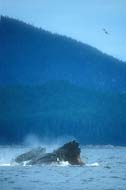
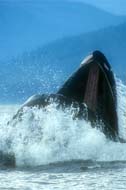
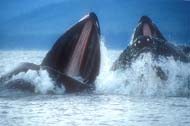
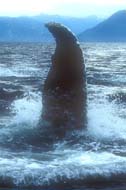
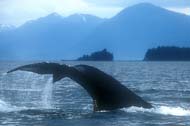
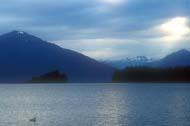
We were there to photograph the humpback whales (Megaptera novaeangliae) that migrate up to the coast of southeast Alaska for summer feeding on krill and small schooling fish such as herring and mackerel. We spotted whales feeding near the small town of Tenakee Springs (above). This was the only town for many miles around, but the fish must have been there, because the whales stayed close to the town for a good portion of the day. 


2


3


4


5

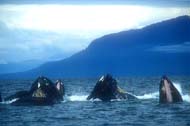
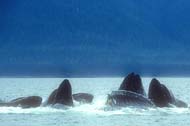
Our primary goal was to get shots of the whales’ inventive technique known as “bubble net feeding.” This is a form of co-operative feeding behavior that is almost unique to this species (see my earlier post from a February 2008 trip on how sailfish do something similar). The humpbacks dive beneath a school of fish and encircle them in a “net” of bubbles that the fish won’t swim through. The whales then swim up through the bubble net, surfacing with their mouths open and their throats engorged with fish, which they swallow in one gulp. A recent article in BBC Wildlife Magazine described bubble netting as “…one of the most extraordinary displays in the natural world…” and having now witnessed it I would certainly not disagree with that assessment. The above shots of this behavior are from a fairly typical vantage point–since these are marine mammals in U.S. waters, you must keep a respectful distance and use a long lens (I had an 80-400mm zoom).


6


7


8

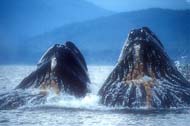
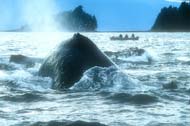
These three shots were from a single encounter where the whales popped up suddenly, much closer to the boat. To say I was unprepared is an understatement. We usually tried to be on the bow when the whales surfaced. When this one happened, I was still inside the boat and had to just poke my camera through the portside window. Needless to say I was fortunate to get these shots, helped by a camera shutter speed of about 1/1000sec and image stabilization technology in the lens.


9


10


11


12

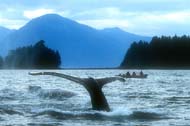
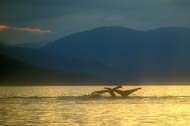
Some other humpback shots. We didn’t have good light, but the Alaska background was nice.


13

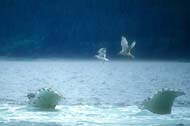
Since the Olympics had just started, I decided to add this shot from the "Synchronized Fin Wave & Bird Landing" event. The whales have their pectoral fins aligned pretty well, but those birds look like they need a bit more practice!


14


15

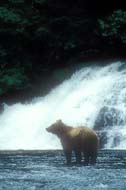
Oh, and there are bears in Alaska! Because Jon’s boat is a compact 22 feet, we were able to motor up a stream and do some land-based shots of this young grizzly bear (Ursus arctos) trying to catch salmon beneath a waterfall.


16


17

As I mentioned, we didn’t have much in the way of good light–those overcast skies in the photo above left were typical. As shown in the photo above right, we did get some shafts of sun for “golden light” during the long twilight (it didn’t get truly dark until around 10:00pm), but we weren’t able to get the uncooperative whales properly aligned with the setting sun. Hey, no complaints though! Considering the six days we’d planned to be out there photographing had been cut down to one, I was more than happy with the results!

Best to all,
Ken


http://www.seaimages.org

Whale Sharks Off Isla Holbox, Mexico — July 8-15, 2008

I went to Holbox Island (say "hole-bosh"–the "x" in Mayan is pronounced "sh") to snorkel with whale sharks. The sharks are there from mid-June to early September each year to feed in the plankton-rich waters. This was somewhat similar to my last trip in February in that it was land-based from an island, and I flew into Cancun (on Mexico’s Yucatan Peninsula) to get there. And while both trips included a ferry ride, this one was preceded by a two hour van ride to the town of Chiquila. So if you’re coming from the San Francisco area–it’s a long travel day (I overnighted in Cancun).


Holbox is located 40 miles northwest of Cancun and is about seven
miles long and a mile wide. There is only a fishing village on the
island–also called Holbox. There are no high-rise hotels, only
"boutique" ones mostly built in the past three years to accommodate
the growing tourist business. An article in the May 2004 issue of
Islands Magazine was the first in a major travel magazine about Isla
Holbox, and more visitors have been coming each year since then as
the word about the whale sharks spreads. Only snorkeling is
permitted with the whale sharks–no scuba diving–so just about any
tourist regardless of experience level can try it.


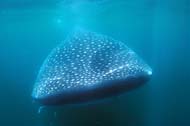
Whale sharks (Rhincodon typus) are the world’s largest fish (NOT a
whale), attaining lengths that can exceed 40 feet. Despite their
size, they are harmless to humans, filter feeding on plankton,
krill, small fish and squid through the huge mouth at the front of
the head that can be more than four feet wide. They are found in
warm oceans worldwide. I’ve seen them at Isla del Coco (Costa Rica)
and the Galapagos Islands (Ecuador), and sightings are also common
at Ningaloo Reef in northwest Australia and near Thailand.


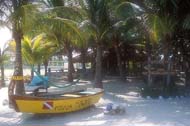
The tour leader for our trip was Jacqueline Russell (http://www.WildOceanAdventures.com). She has done this trip many times, and capably handled the transport, lodging and snorkel operator details for our group of six guests. The Mawimbi Hotel where we stayed (outside area shown above) had nine rooms, all with AC. The staff took some effort to keep things clean, though it was hard since we guests were constantly tracking in sand from the beach. The boat we boarded each morning was anchored here, so you had a walk of only about 100 feet from the hotel–hard to get easier access than that, unless you’re on a liveaboard!


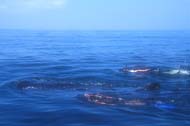
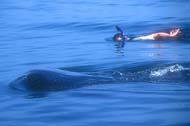
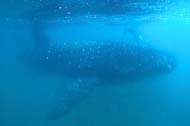
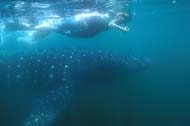
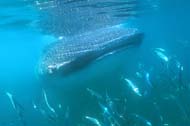
Above are some shots of the whale sharks and snorkelers from the boat. The sharks were feeding about 35 miles offshore, which was an hour each way from Holbox. Only two guests were allowed in the water at a time (a good rule), along with a licensed guide. While there were many tourist boats out there, the whale shark population at this time of year is such that there was no problem finding a shark of your own to swim with. As you can see, we were blessed with flat, calm water. While I was told such ocean conditions are common for this time of year, please note that Hurricane Dolly blew through northeast Mexico and the Texas gulf coast about a week after I left–whale shark season here is also hurricane season.


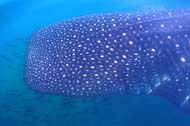
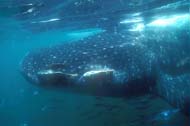
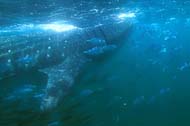
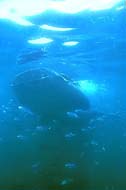
The problem with trying to get a "full body" shot of an animal this big is that you need better water visibility then we generally had. The viz was poor because of all the ‘lil critters in the water that the sharks were there to feed on. So poor viz kinda goes with the whale shark territory here. The shot on the left will give you some idea of how big these sharks can get (this one was estimated at about 38 feet), as you can make out our dive guide just above its head. The shot on the right shows a snorkeler with a juvenile about 18 feet in length.


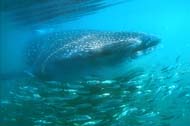
I had better luck with my photos when I got in close. What some call the "first rule" of underwater photography applied here: "Eliminate the water between your camera lens and the subject." With my zoom lens set at its wide angle maximum of 17mm, I was VERY close in the first four photos above!


At one point, I had just photographed a whale shark as it swam by, and as I turned around, this manta ray (about 15 feet across) also passed right next to me. We saw many of the filter-feeding mantas, as they were there for the same reason as the whale sharks.


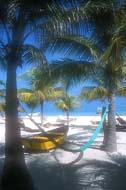
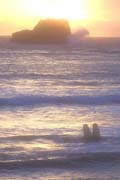
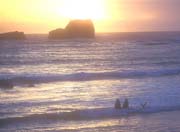
The beach in front of our hotel on the island’s north side faced into the gulf and gave us nice sunset photo opportunities as well. This was an enjoyable trip–close (compared to many of my destinations), and whale shark encounters are pretty much guaranteed!

Best to all,
Ken


www.seaimages.org


Sailfish Off Isla Mujeres, Mexico–February 9-17, 2008

I was “land-based” for this trip–on Isla Las Mujeres–about a 15 minute ferry ride from Cancun, on Mexico’s Yucatan Peninsula. Every year around January-March sardines migrate north from off the coast of Brazil to feed on an upwelling of plankton about 40-50 miles from shore at the Isla Mujeres bank, and the sailfish arrive to feed on the sardines. The sailfish work cooperatively to “herd” the sardines–behavior only observed in billfish, dolphins and whales among all the marine animals in the world. The feeding sailfish were first filmed here only a couple of seasons ago for the Discovery Channel’s “Planet Earth” series, so for underwater photographers to get shots of it is still fairly unique.


We left the dock every morning at dawn, and usually got back just before sunset. We’d pass this schooner every day going out and coming back–never saw anybody on it–looks like it’s waiting for the next “Pirates of the Caribbean” flick to be filmed. During my time there the sailfish action happened to be located about 50 miles north and 14 miles east of our boat dock–which meant we had a daily three-hour commute EACH WAY to get to it and back.


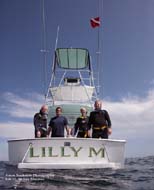
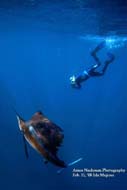
These two photos were taken by the organizer of our trip, Amos Nachoum. That’s our “team” for the week on the left–don’t know why I look so grim–perhaps contemplating the bumpy three-hour ride back to the dock that day. Our boat was the 30′ long and 12′ wide “Lilly M”–while the “commute” was long, this boat sure beat the rubber inflatables I’m usually on when trying to film big marine animals! The photo on the right (of me) shows how it worked–we’d locate a sardine baitball by watching for formations of frigate birds bunched closely over the water, and then roll in with cameras in hand, and snorkel to the baitball as fast as possible. We had SCUBA tanks on board, but didn’t use them because of the “need for speed.” Fortunately, everything usually happens pretty close to the surface. Sailfish have been clocked at 68mph–the fastest fish in the ocean–so the action was quick, brief (the small baitballs didn’t last too long), and hard to capture.


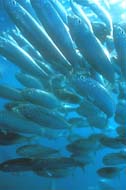
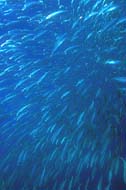
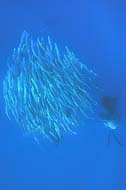
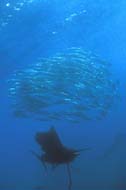
These are the Brazilian sardines (Sardinella brasiliensis) that migrate more than halfway up the east coast of South America to feed in this relatively small area of the Caribbean Sea. If the sardines in that close-up shot on the left look nervous, they have reason to be!


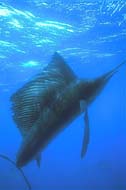
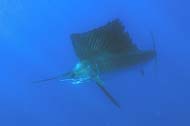
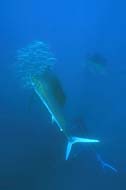
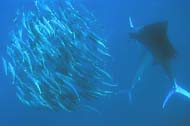
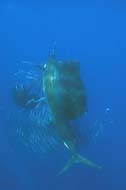
And here are the Atlantic sailfish (Istiophorus albicans) that are attracted by the sardines. It was hard to focus on individual sailfish, as they moved so quickly. They usually range from six to nine feet in length. That may sound like a large subject, but you had to be pretty close to get something that was more than a small part of the view shown by your wide-angle lens.


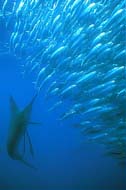
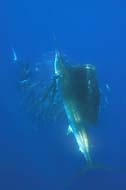
The photos above show the sailfish “herding” the sardines to the surface and into baitballs to feed. We found the easiest thing to do was focus the camera on the baitball, then wait for the sailfish to come in. The “sail” is the dorsal fin and it often covers the entire length of the fish’s back. It’s folded down and to the side when the fish swims normally, but is raised when the fish is threatened or excited, to make it appear much larger than it actually is. Groups of sailfish raise their sails to help “herd” the fish schools into baitballs. The baitball moves quickly (so would you if you were a 10-inch fish chased by an 8-foot predator). The photo opportunities were usually when it either moved in your direction, or (infrequently) the baitball might hang out with or beneath us in an attempt to hide.


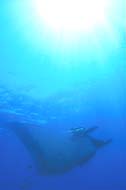
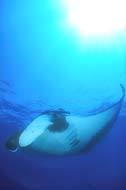
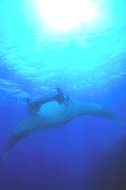
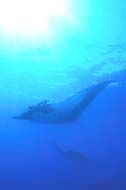
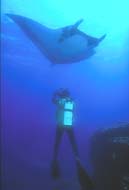
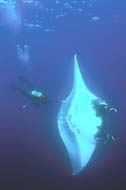
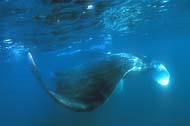
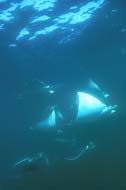
We chartered the boat for seven days, and were able to get to the sailfish on five of them–pretty good, given that it was winter and how far we had to travel. On one of the other two days when the weather didn’t cooperate, we snorkeled with manta & mobula rays in the open water less than an hour from the dock. The rays were feeding on the plankton-rich water, so they stayed around, but that also meant the visibility was terrible–like trying to take photos while swimming in soup (which it actually was–to the rays!) In the above shot at left, the giant manta ray (Manta birostris) was doing an upside-down “barrel roll” while feeding. The shot looks “soft” not because of the focus, but due to the cloudy water. The water looks cleaner in the photo above right, only because I was about two feet from the ray. You can just make out a snorkeler with his camera, above and behind the ray–gives you an idea of the relative size of the manta (they grow to in excess of 20 feet), and also how quickly the visibility decreased if you weren’t VERY close.


While the mantas were solitary feeders, the mobula rays (Mobula sp.) liked to hang out together. Often mistaken for mantas, mobulas are much smaller, rarely over ten feet.


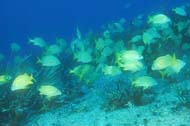
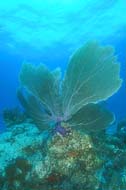
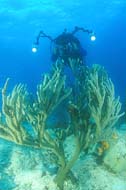
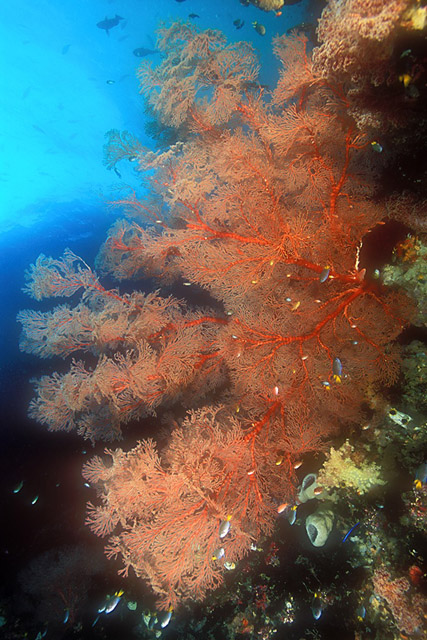
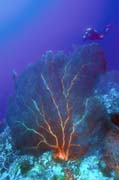
On the other day that we were weather-challenged, we put on SCUBA tanks for the only time that week and did a reef dive. I hadn’t heard much about the reef diving around Isla Mujeres, and now perhaps I know why. I was first in the water, and surfaced five minutes later, convinced I’d missed the reef. No–I was on the “reef”–it just didn’t look like what I think of as a reef. Once in a while we’d see an aggregation of fish or a solitary sea fan as above, but not often.


Trip Leader Amos Nachoum obligingly modeled for me at one of the few spots of color we encountered on this dive.


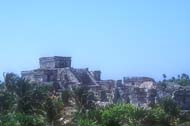
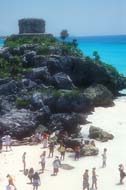
If the weather is uncooperative and the mantas aren’t feeding, I’d recommend a day trip to the beautiful Mayan ruins at Tulum in lieu of a reef dive. No hike through a jungle is involved–you can picnic on the beach and/or frolic in the warm Caribbean Sea at the same spot. (Note: I visited Tulum and took the two photos above on a different trip)


As usual, I’ll end with a sunset. I knew this trip was a “roll of the dice” because so many things have to go the right way to get the photo–calm seas, sun for ambient lighting and fast shutter speeds, water visibility, subjects present, close and cooperative (or at least preoccupied enough to ignore you), and so on. It was definitely not one of those “Go down the anchor line to the barrel sponge and the frogfish will be just on the left” kinds of trips–so I was happy to get some sailfish images.


Best to all,
Ken
http://www.seaimages.org

 
More news by category Topic -: Buy phentermine saturday delivery ohio Tramadol hydrochloride tablets Picture of xanax pills Free shipping cheap phentermine Buying phentermine without prescription Safety of phentermine Pyridium Generic viagra cialis Cialis generic india Pink oval pill 17 xanax identification Buy free phentermine shipping Best price for generic viagra Information about street drugs or xanax bars Ordering viagra Snorting phentermine Hydrocodone overdose Lithium Amiodarone Get online viagra Order viagra prescription Order xanax paying cod Cheap phentermine free shipping Imiquimod Tramadol next day Linkdomain buy online viagra info domain buy onlin Pfizer viagra sperm Vidarabine Cheapest viagra price Prevacid Viagra cialis levitra comparison Dutasteride Lisinopril Thiotepa Female spray viagra Black market phentermine Betamethasone Cialis forums What does xanax look like Loss phentermine story success weight Order xanax overnight Viagra alternative uk Diet online phentermine pill Order xanax cod Mecamylamine Eulexin Cheap hydrocodone Buy cheapest viagra Viagra xenical Phentermine with no prior prescription Xanax in urine Macrodantin Cheap phentermine with online consultation Epivir Buy phentermine epharmacist Ditropan Woman use viagra Cialis erectile dysfunction Xanax withdrawl message boards Viagra online store Atorvastatin Generic ambien Is phentermine addictive Next day delivery on phentermine Buy online viagra Ethanol Natural phentermine Avandamet Xanax long term use Diet page phentermine pill yellow 5 cheap Cheapest secure delivery cialis uk Information medical phentermine Cialis experience Phentermine no perscription Compare ionamin phentermine Viagra cialis levivia dose comparison Noroxin Effects of viagra on women Buy cheap cialis Viagra shelf life Hydroxyurea Phentermine discount no prescription Buy cheap online viagra Dog xanax Online cialis Viagra class action Viagra price Phentermine without prescription and energy pill Hydrocodone cod only Nicoumalone Cheapest viagra Cheap ambien Vicodin without prescription Phentermine prescription online Phentermine snorting Mirtazapine Quazepam Isradipine Buy generic viagra online Xanax look alike Moxifloxacin Viagra experiences Piroxicam Nicorette Free try viagra Sotalol Cash on delivery shipping of phentermine How do i stop taking phentermine Xanax prescriptions Cheapest phentermine 90 day order Niacinamide Phentermine weight loss Phentermine

Indonesia Trip, Sept. 16-Oct 7, 2007


I did a three-week dive trip to Indonesia in Sept-October, which was very capably arranged by my friend Drew Wong. For those of you who are geographically challenged like me, Indonesia is a republic in Southeast Asia consisting of more than 17,000 islands spread over 3,000 miles. It is the world’s fourth most populous country, with over 234 million people.

The trip required five plane flights each way. I went from San Francisco to Hong Kong, then Singapore, then Bali. After an overnight, we took domestic flights to Ujung Padang, then Ambon. Repeat same on the way back, except our flights started out of Sorong, where we ended up after +1,000 nautical miles (most travel was at night). We dove in the Banda/Seram Sea and the itinerary included Raja Ampat (”four kings”), which is an archipelago of 1,500 islands and cays located off the northwest tip of West Papua (known as Irian Jaya until recently).


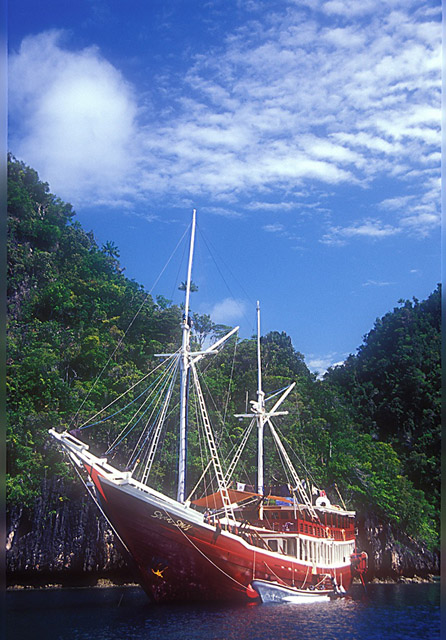
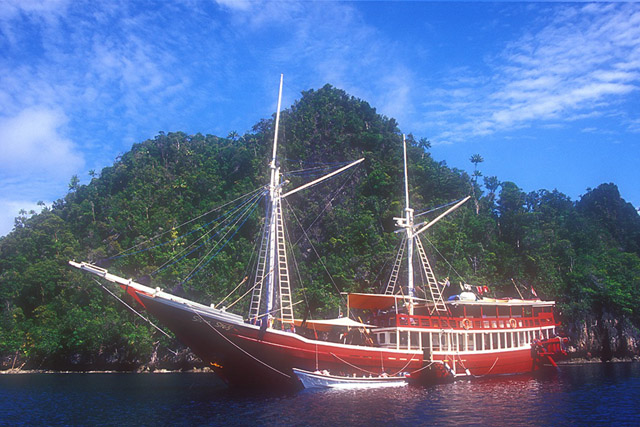
Our liveaboard dive boat was the Seven Seas, an upscale schooner which just started up in 2006. A roomy boat with a length of 100′ and a 25′ beam, this is a classy operation–for example, we were served four meals daily (we got second breakfast, just like hobbits). Freshly dried towels after every dive, waited on hand & foot by a crew of 14, etc., etc.


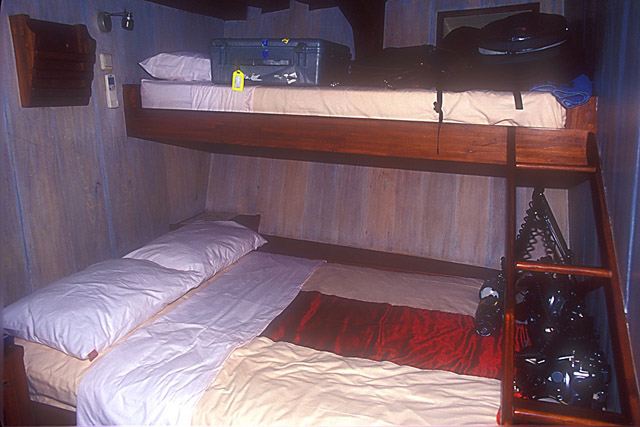
Of course, it didn’t hurt that while the boat can hold up to 18 guests, we were 11, and I had my own room with double/twin beds for the 16 nights I was on board. Each room has it’s own bath, and individual AC which actually worked when you adjusted it. There was also plenty of space on board to work on cameras–mine are in the photo above because I didn’t get around to taking the shot until the end of the trip, and I’d brought my rigs to the room to break them down for repacking.


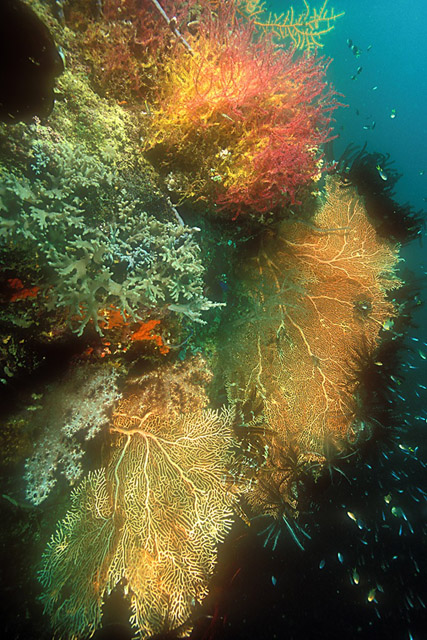
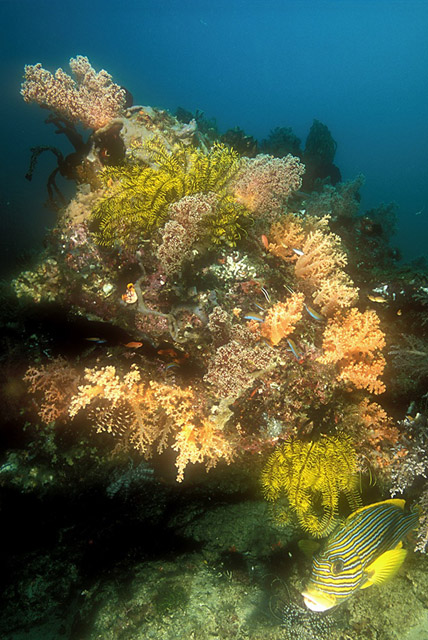
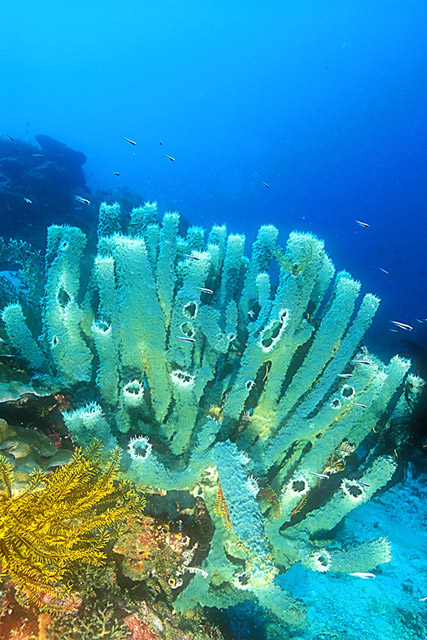
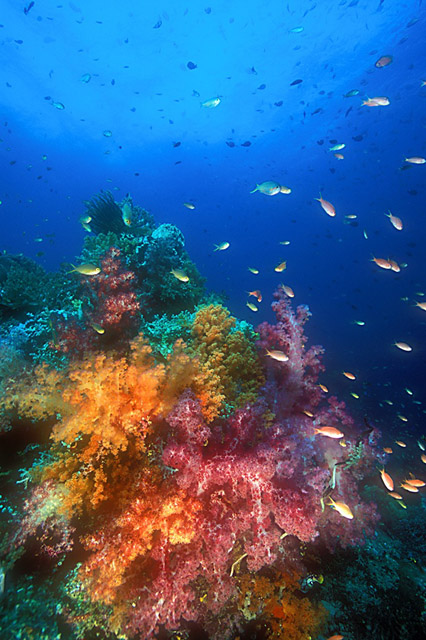
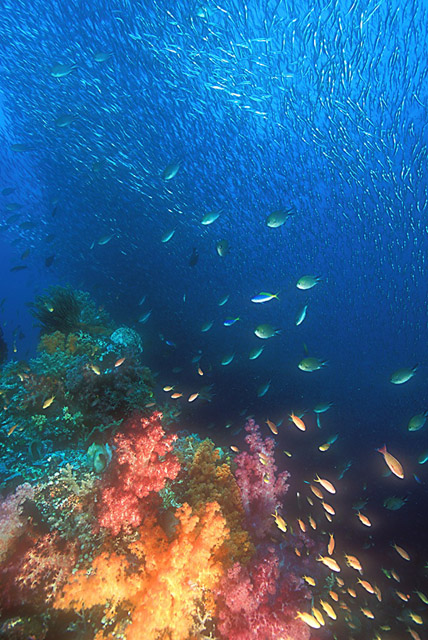
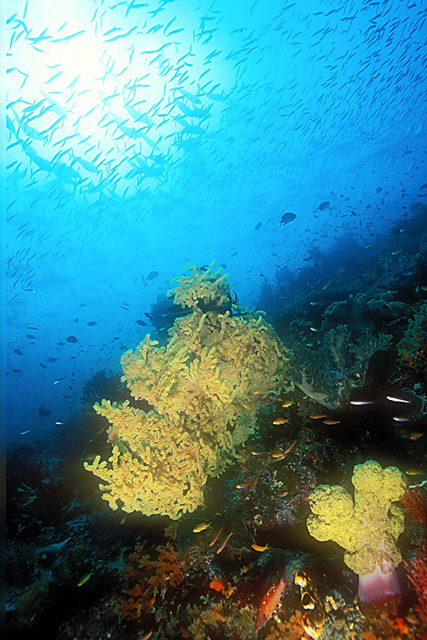
The above photos serve to illustrate the yin & yang of our trip–you can see the reefs are gorgeous, but you can also tell from the color of the water in
the background that the visibility was often–challenging. Guest Robert Delfs, an ex-pat who lives in Bali and has been on numerous Seven Seas trips, said this was the worst viz he’d seen. These were the times to practice your close-focus when shooting with a wide-angle lens.


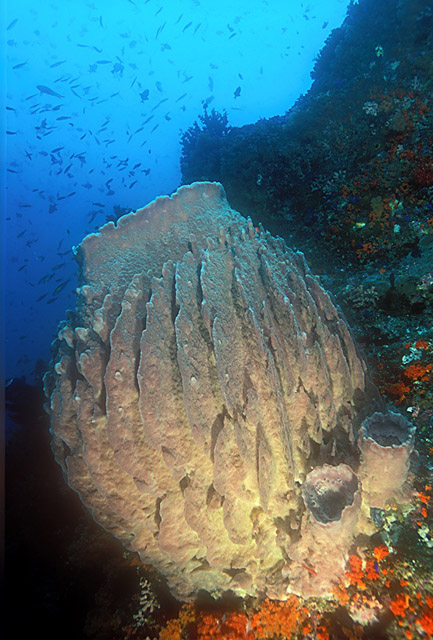
On the other hand, we also experienced dives with all the blue-water backgrounds a photographer could want….


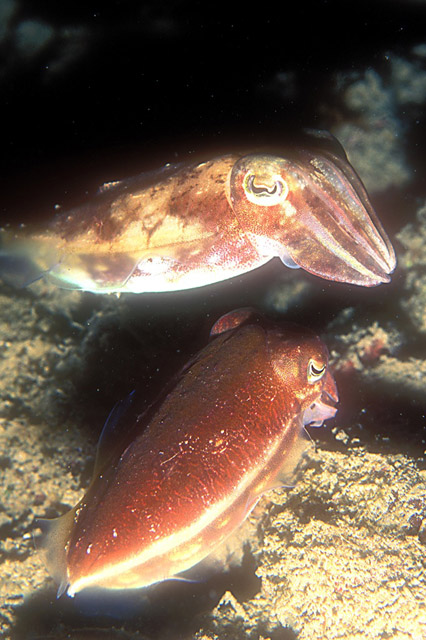
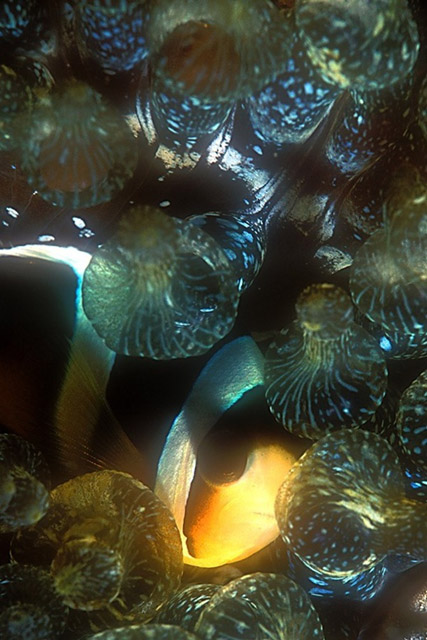
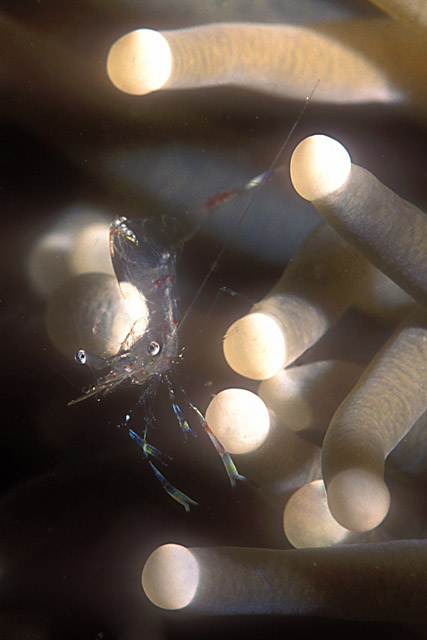
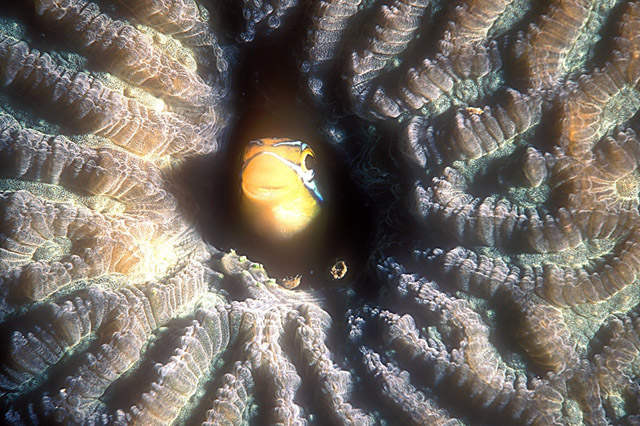
Indonesia is a “macro paradise,” but I made a conscious effort to mostly shoot wide angle, even to the point of leaving my 105mm & 200mm “mas macho” macro lenses at home (on purpose, as opposed to my usual method of forgetting things). Why? I could say it’s because I shot a lot of macro on two prior trips here (one to this general area in 2002, and another to the Komodo area further west in 2001), but you can always find new macro subjects to shoot, so that’s not it. I’d say the real reason is that I’m kinda “tired of macro.” That said, I did bring the 60mm, which is flexible for slightly wider macro subjects such as the two cuttlefish above, and when combined with the pricy ($500) Macro Mate adapter (can be slipped on and off depending on the subject) you get up to twice life-size (2:1) reproduction. I used that combo for the above anemonefish, shrimp and blenny shots–none of these are rare subjects, but I was attracted by the area around each.


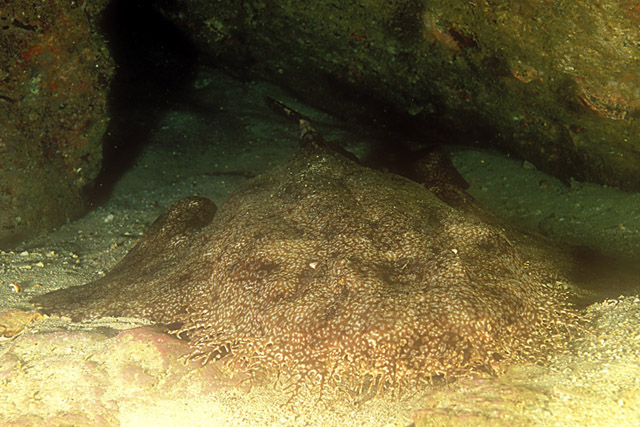
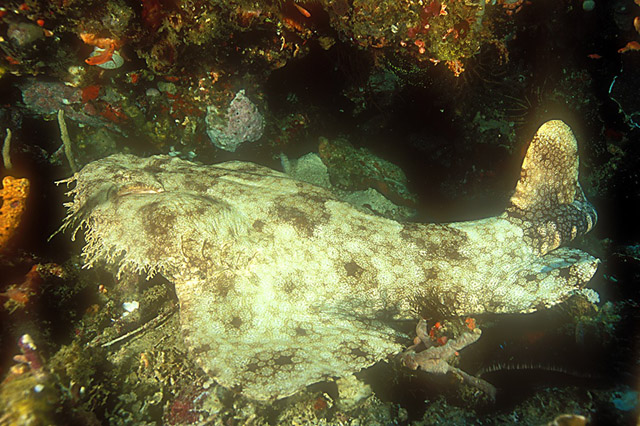
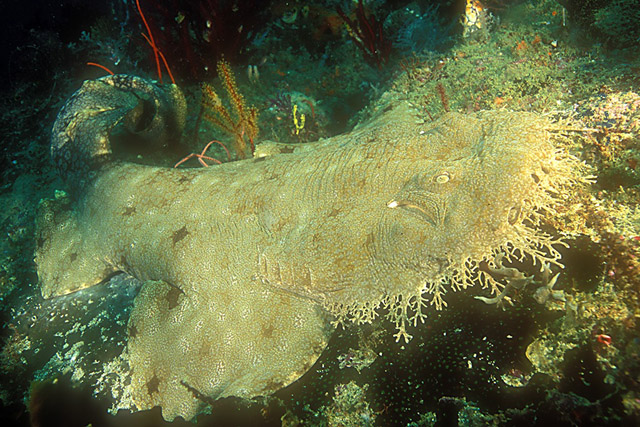
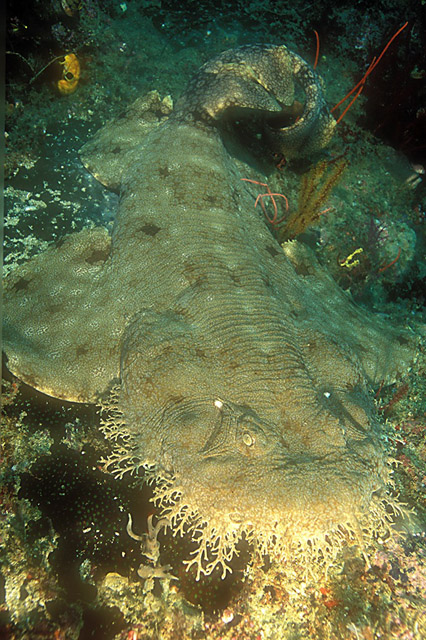
Tasseled wobbegong sharks (Eucrossorhinus dasypogon) can be hard to spot, but three were pointed out to me on dives at different locations during this trip. Fellow guest Craig Ruaux showed me the first (top, left) which was in a cave, and Divemaster Tommie pointed out one (top, right) that was under a ledge. Thanks, guys! The shots at lower left and right above are of the third shark, which guest Celine Vignolles found. This shark was large (6-7 feet), but had its tail curled up so that you could get the whole animal in a shot while still being close. Best of all, it was lying on TOP of a ledge (albeit at a depth of 90′), without the roof of a cave or coal head over you to hinder camera placement. Merci beaucoup, Celine!


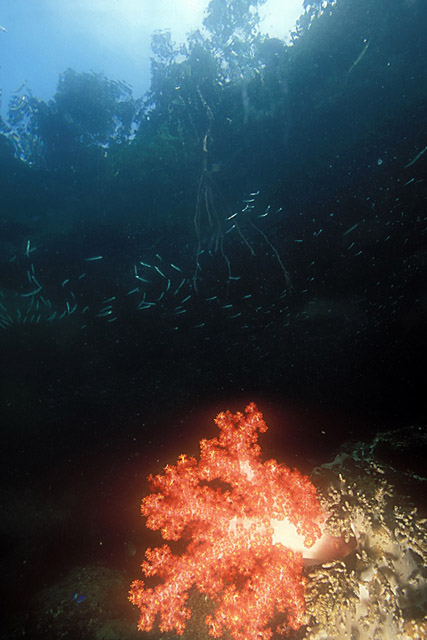
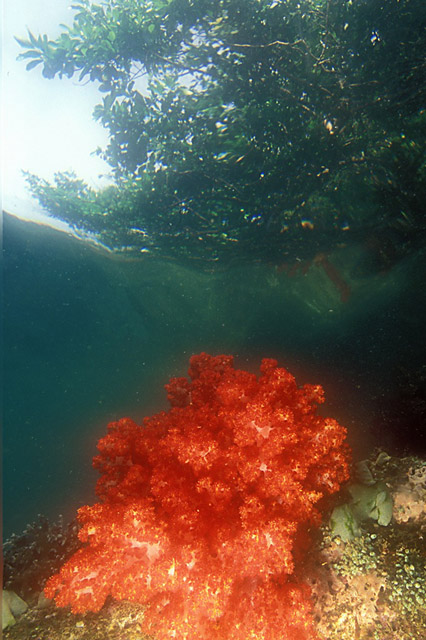
One shallow area off an island in the Triton Bay region didn’t have good water visibility generally, but there was some soft coral growth near the surface, so I tried "reef meets rainforest" shots.


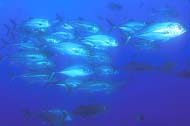
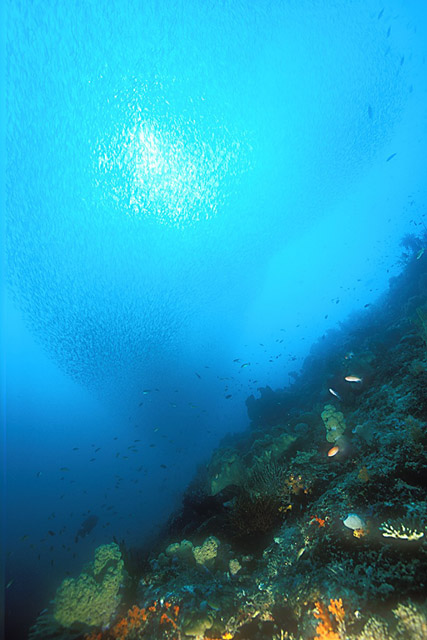
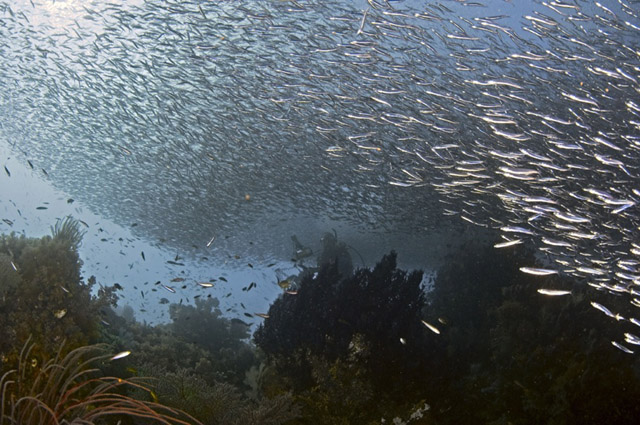
This was my favorite dive location of the trip, in Raja Ampat southeast of Misool (one of the four main islands from which the “four kings” gets its name). Raja Ampat has been called “one of the last true frontiers of wild diving on the planet” and this spot makes you a believer. At times both the reef and the sun were blotted out from the massive schools of silversides as they were chased over us by various species of feeding jacks (bludger trevally, rainbow runner, etc.)


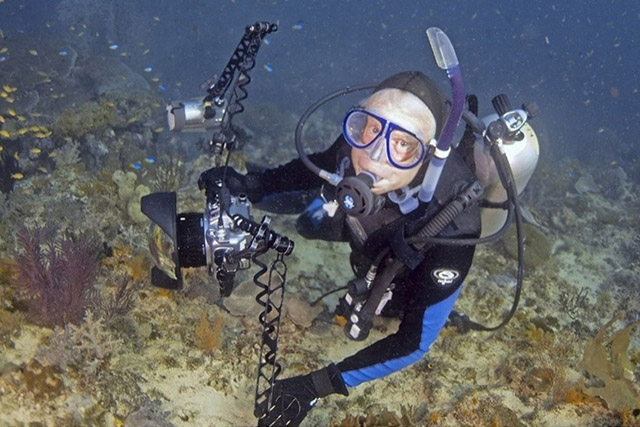
Here are a couple of photos guest Robert Delfs took of me during the incredible dives off Misool–I’m in the middle of that humongous swirl of fish in the shot above left.


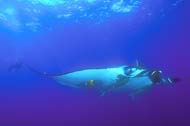
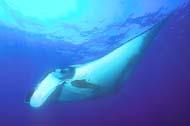
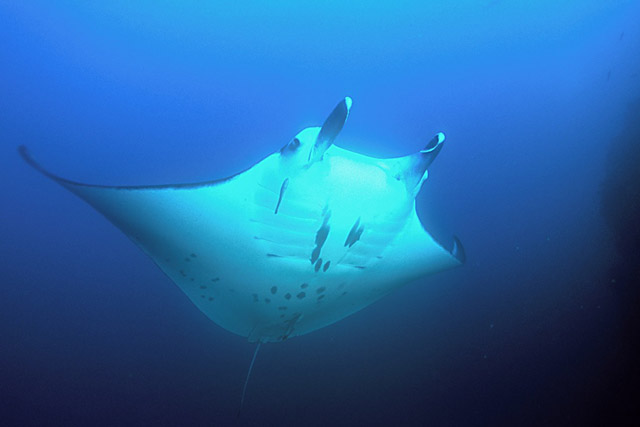
As if the fish schools weren’t enough at this place, I saw mobula rays circling up in the water column, then this manta ray swam out of the blue and up & over me.


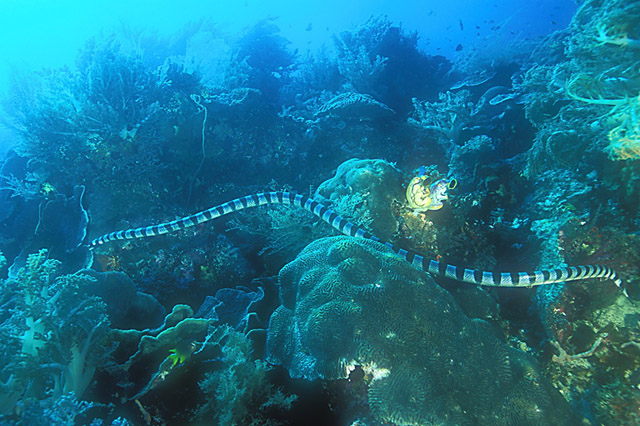
This shot was taken on our last dive–at a spot called Melissa’s Garden, near Cape Kri. Not a good photo (the sea krait was foraging up current, and we were being pushed swiftly the other way), but notable for its size–as you divers can tell from the reef surrounding it, this was about an eight-footer!
That’s it for this trip, folks!

Best to all,
Ken
http://www.seaimages.org


“Fourth Annual” Bahamas Shark Fest–May 2-13, 2007


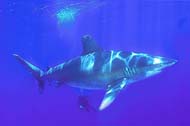
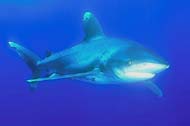
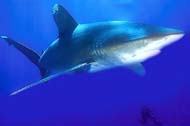
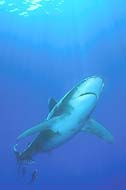
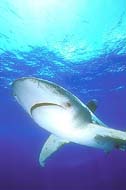
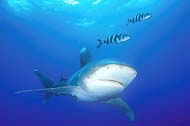
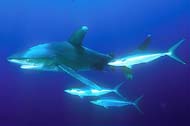
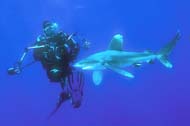
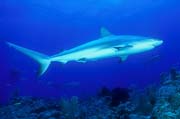
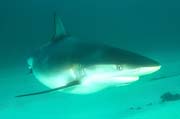
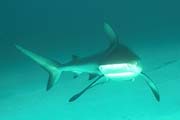
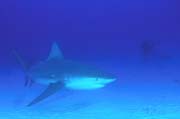
I went back for my "Fourth Annual" with Jim Abernethy’s Scuba Adventures in May, again looking for shark photo opportunities (scroll down on this blog to see the reports on the Third and Second Annual Shark Fest trips). Why did I do it again? For one thing, I can’t think of another operator who has consistently exceeded my expectations every time I’ve been out with him–and yes, Jimmy and his crew did it AGAIN this year! (561-842-6356; www.scuba-adventures.com) Second, this was a "different" trip. Rather than going on an overnight run out of West Palm to the waters off Grand Bahama Island for the shark "usual suspects" (though we did go for those on the way back as well), on this trip we traveled for two days and about 300 miles to far southeast Bahamas, in an area known as the Tongue of the Ocean. We were looking for a specific species of shark that I’d never even seen, much less photographed, in my 35 years of diving–the Oceanic Whitetip (Carcharhinus longimanus).

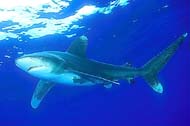
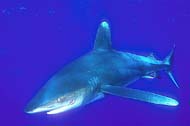
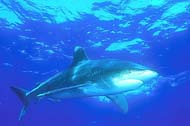
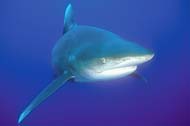
The Oceanic Whitetip is stocky and bulky, but can grow to 13ft in length, and will be confused in name only with the small, harmless and (in some spots) common-as-flies White-tipped Reef Shark (Triaenodon obesus). The Oceanic Whitetip is easily identified with its large, paddle-like pectoral fins, which are significantly larger than most other shark species and conspicuously rounded. There are at least a couple of reasons why I’d never seen one: (1) they are a "pelagic" shark, which means they prefer off-shore, deep-ocean areas–not likely to be spotted on the shallow reefs we divers frequent; and (2) there are a lot less of them to see–those large fins are highly valued as the chief ingredient of shark-fin soup–and studies have shown this shark’s population declining anywhere from 70 to +90 percent, depending on the area, due to longline fishing.


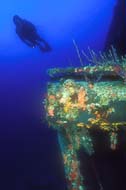
Since it was a two-day trip to get where we were going, Jimmy stopped on the way at the site of the Theo, a wreck lying on its port side at a depth of 90-110 feet. Not many schools of fish on this “artificial reef” as yet, but an interesting dive.


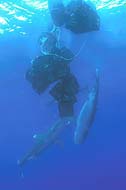
So this is how it worked. Since these are pelagic sharks, the crew would put out a float in the “blue water” with these sealed milk crates attached and filled with bait. We had success from the very first day of our arrival, and for each of the five days we spent in this area, both the weather and the number of shark photo opportunities seemed to improve. Divers and bait crates would essentially drift with the current, the sharks coming and going. It was a tad unnerving when you had to keep your eye on multiple sharks, and no reef to hide in. There was also a slight problem at times when it was windy, as the float would be pushed faster than the current, and we’d spend most of the dive kicking to keep up, pausing for the occasional photo. If it got too windy, Jimmy would just attach a line from the float to the boat to slow things down–and oceanics are NOT a shark that’s intimidated by the presence of the boat–or much of anything else.


Sorry if the above represents too many shots of the same subject, but oceanics WERE the purpose of this trip, and we did five days of photos with not much else to shoot out there in the blue water. After not having seen one before this trip, I now have a lifetime supply. We felt the trip had been a success after the first day we got there–and then weather, viz, number of sharks, etc. just kept getting better. See how my expectations got exceeded by Jimmy’s operation yet again??

Another aspect worth noting is how cooperative a photo subject the oceanic whitetip is. One source mentions this shark “….makes up for its comparatively leisurely swimming style with an aggressive attitude.” So the shark approaches slowly, allowing you ample time to frame the subject–and then you just watch it come closer and closer in your viewfinder before clicking the shutter. I set a personal trip record for the number of times the dome port on my camera housing was bumped by one of these sharks, but I’d characterize the behavior more as bold/curious than “aggressive.” They were just checking us divers out as a potential meal–nothing personal. Once they determined we were not the source of the fish scent, they would move on–but would come back CLOSE, again and again, just to make sure. Not every diver’s idea of a good time, but a shark photographer’s dream!

No less an authority than the late Jacques Cousteau described the oceanic whitetip as “…the most dangerous of all sharks.” Indeed, this shark is considered responsible for more fatal attacks on humans than all other shark species combined. This statement needs a Barry Bonds Home Run Record-sized asterisk, however. Because this is an open ocean shark, these fatalities are usually a result of predation on injured, bleeding people from shipwrecks or downed aircraft. For example, oceanics are deemed responsible for many of the 60-80 sailor shark deaths after the sinking of the USS Indianapolis in 1945 (remember that description by the Robt. Shaw character in the movie Jaws?) Such incidents are not included in common shark-attack indices, and of course the near-shore unprovoked attacks by great whites, tigers and bull sharks receive much notoriety. Since we were not “perceived as prey,” we didn’t really feel threatened, although we kept a watchful eye on every shark approach, and it probably wouldn’t have been a good idea to go in the water if you’d cut yourself shaving that morning. :>) ..

Oceanic whitetips usually roam in isolation from their own species, but have been observed with pilot fish, dolphin fish, remoras and even pilot whales. We saw several sharks accompanied by small schools of pilot fish (Naucrates ductor) and others with rainbow runners (Elagatis bipinnulata)–another open water fish (jack family) rarely seen over reefs.


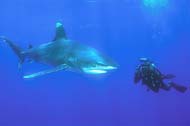
We named this juvenile oceanic “Peanut.” The perspective is distorted a bit in the above photo with the diver in the background–she’s a lot smaller than she looks. The pups are born at a length of 26 to 30 inches, and she was about 3 & 1/2 feet long, so this was a young shark! Watching her navigating with those outsized pectoral fins she had yet to grow into was like watching a puppy golden retriever learning to run without tripping over its own big paws.


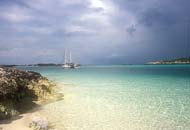
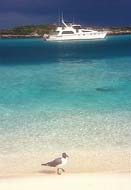
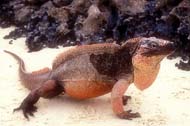
Once we had our fill of Oceanic whitetips, we visited some other sites. These shots are from Allen’s Cay in the northern Exuma chain. It’s a popular anchorage, less than a day’s sail south of Nassau, and the scenes are more typical of what most people expect to see on a Bahamas vacation! The Allen’s Cay Rock Iguana (Cyclura cychlura inornata) feeds on fruits, leaves and flowers of the plants on this tiny island.


We did a dive on a blue hole near Nassau, but the viz in the hole was terrible, so we mostly poked along the rim, doing reef shots in about 30 feet of water.


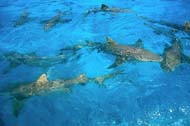
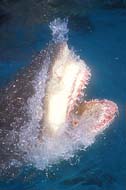
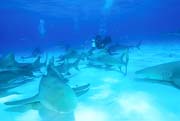
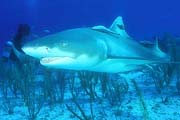
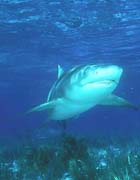
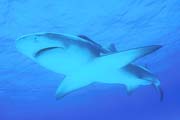
And then there was (of course!) a stop on the way back at Tiger Beach, the main location for my prior Bahamas Shark Fest blogs. You know things are normal when you see the lemon sharks (Negaprion brevirostris) circling on the surface after the crew hangs bait crates off the boat’s stern. We also “wrangle” the sharks in with bait attached to fishing lines–if you click on the above shot on the right to enlarge it, you may see the bait fish in the lemon shark’s mouth.


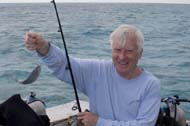
Laugh if you will (and I’m sure you will), but all guests and crew worked to hook these small fish. They played an important role in bringing in the sharks, as noted in the paragraph and two photos just above this portrait of the proud fisherman and his catch (thanks to Jim Abernethy for the shot).

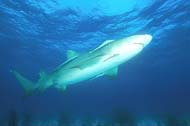
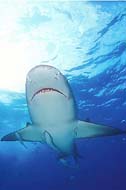
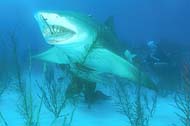
Underwater shots of lemon sharks.


The above photo shows behavior I’ve seen a few times before, and commented on in last year’s Shark Fest blog. A lemon shark will suddenly just stop, and open its mouth to allow itself to be cleaned by the sharksuckers (Echeneis naucrates–remora family) which are usually attached to the shark. The shark creates its own “cleaning station!”


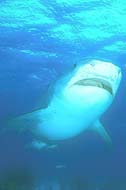
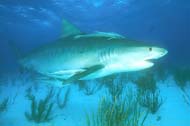
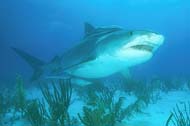
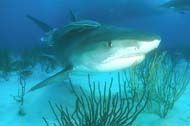
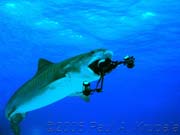
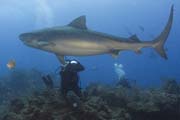
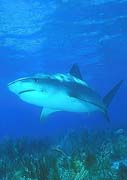
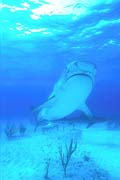
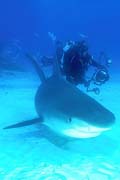
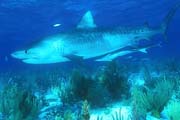
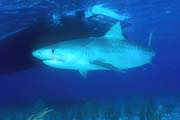
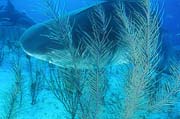
And what would Tiger Beach be without tiger sharks (Galeocerdo cuvier)? One of the highlights of our trip was the return of Emma (first three photos above), the star of my very first blog posts from our “Second Annual” trip here. Emma was docile as ever, coming close but not exhibiting any threatening behavior. The only difference is that she’s even bigger (about 14 feet now) and really HUGE around (maybe pregnant?) The photo on the lower right is of another tiger on the scene–not as big as Emma, but not at all shy about coming close, either.

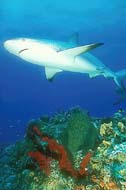
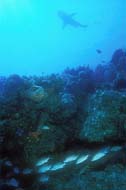
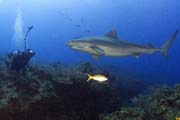
We then spent some time at a place Jimmy calls Carcharhinus Cut. Similar to the site we dove last year called the Mother Lode, it’s an opportunity to photograph Caribbean Reef Sharks (Carcharhinus perezi) with the colorful reef. The photo on the right, above served as a kind of reminder to me–should we divers be emulating the behavior of those fish hiding in the reef? :>)..


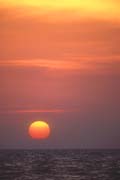
As usual, we also had fabulous Bahamas sunsets to photograph–a good point at which to end this blog post. The group shot photo above is courtesy of Jim Abernathy.

I now have photos of all the “Big Five” shark species–great white, tiger, oceanic whitetip, bull and great hammerhead (www.seaimages.org), click on “Photo Examples” than click on “Sharks” for more)–and all except the great white shots were taken on Jim Abernethy trips. Many thanks to Jimmy and crew members Wade, Don, John and Ed for another fantastic trip! I’ll be back next year!

Best to all,
Ken

“THIRD ANNUAL” BAHAMAS SHARK (AND DOLPHIN) FEST


May 3 -11, 2006
Hi folks! I went back to the Bahamas last month to take shark images for the third time in three years with the same di